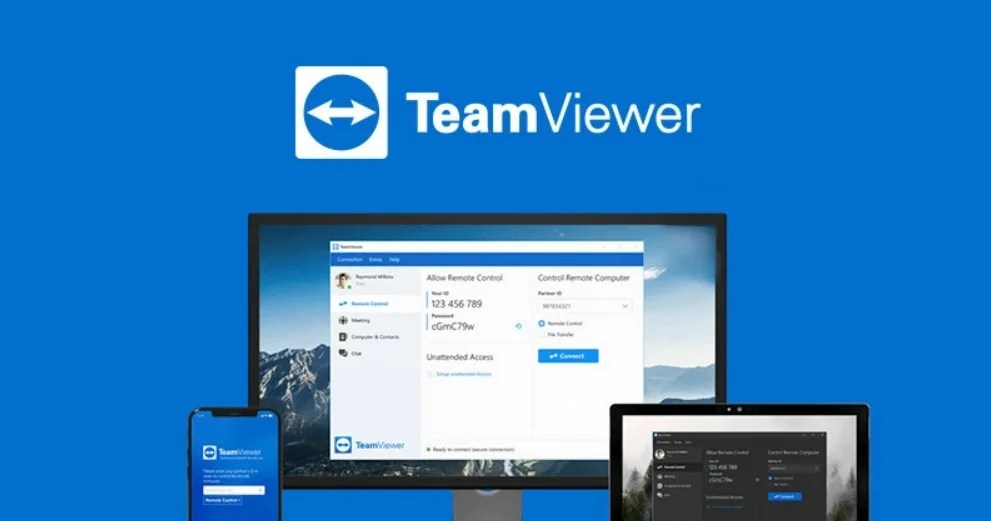
When we look at TeamViewer in IT and OT, we first consider the operating environment: in IT, user accounts, roles and fast support access are often central, while in OT the focus is on stable plant processes, clear approvals and as little interference with live systems as possible. For us, the key question is which access tasks are actually needed and how they can be integrated securely into the existing infrastructure. Only from these requirements do we derive which hardware, software installation and testing are appropriate for the specific application.
When you look at TeamViewer in IT and OT, it helps to separate the operating environment first. In IT, the focus is usually on user accounts, roles, support and quickly fixing problems on workstations or servers. In OT, however, access is not just about reaching a system; it is about how to remotely maintain a live production process safely, with high availability and as little interference with critical operations as possible. That is why it makes little sense to talk about the one remote access setup. Instead, the better approach is to distinguish between tasks, rights and operating conditions.
This distinction becomes especially important as IT and production systems move closer together. The same remote access platform is often used for both environments, but the goals remain different: in IT, administration, end-user support and governance are central, while OT also requires availability, process safety and consideration for older or sensitive plant components. If you clarify these differences early, it becomes easier to plan access models and choose the right hardware and system architecture.
Separating IT and OT in remote access
IT refers to the company’s information technology: clients, servers, network components, user accounts and business applications. Remote access in this context is mainly used for administration, troubleshooting, software maintenance and user support. OT stands for operational technology, meaning systems used to monitor and control physical processes such as machines, HMIs and PLCs. IT/OT convergence means that both areas are managed and secured together without ignoring their different operating requirements.
In practice, this means that the two environments can use similar remote access tools, but they place different demands on approvals, failure behaviour and the depth of intervention. If you are supporting an office workstation, an interruption is usually not critical. If you are working on a production cell, even a brief connection loss can affect live processes. That is why the system type, the task and the operating environment should always guide the decision.
What IT access typically includes
IT access usually means remote access to user workstations, servers, network devices and software environments. Typical tasks include helpdesk support, fixing configuration errors, installing updates, managing user accounts and diagnosing network problems. In many cases, the goal is to resolve issues quickly while still documenting who accessed what and why.
That is why central identities, role models and policies matter so much. Access should be convenient, but it should also be rule-based and auditable. This becomes especially important when many users, multiple sites or external service providers are involved.
What OT access typically includes
OT access relates to systems that directly affect a machine or plant. This includes HMIs, which are operator and visualisation systems, PLCs as controllers, and engineering stations used to prepare parameter changes, recipes or programs. Typical tasks include diagnosing machine faults, supporting startup or maintenance situations and carrying out remote maintenance by internal specialists or machine builders.
The key difference from IT is that OT access always has to account for the live production environment. High availability, short response times and minimal intervention are the priorities. Remote access should therefore not be treated as a simple technical channel, but as part of an operating process with clear approvals and a local fallback concept.
How access tasks differ between IT and OT
The differences are most visible in the task itself, in the response logic and in the risk profile. In IT, remote access is mainly a support and governance tool; in OT, it must also help prevent downtime and keep plant conditions safe. Both areas need central management, but the priorities and approval logic are not the same.
A practical comparison helps to separate the requirements more clearly:
| Area | Typical access tasks | Special requirements |
|---|---|---|
| IT | Remote support for employees, server and client administration, network diagnostics, software maintenance | Central identities, roles, policies, logging and scalability |
| OT | Machine diagnostics, access to HMIs and PLCs, support during plant faults, remote maintenance | High availability, short response times, minimal intervention, segmentation and awareness of live processes |
| Shared layer | Site-to-site access, status monitoring, session logs, permission management | Unified governance with differentiated access rights |
This separation is useful because it also helps structure the technical platform. A central solution can serve both environments without requiring the same rights or processes for every system.
Typical tasks in IT
In IT, remote connections are often part of everyday support. A helpdesk agent connects to a laptop to resolve a driver issue. An administrator checks server status, resets permissions or installs updates. Such tasks require clear role allocation, clear responsibility and good traceability of sessions.
This matters because IT access often spans many systems and must scale quickly. When multiple branches or external service providers are involved, central identity management and logging become core capabilities.
Typical tasks in OT
In OT, remote access usually focuses on diagnostics, support and targeted interventions on production equipment. For example, a plant may report an alarm on the HMI and a service technician needs to investigate the cause without unnecessarily stopping the line. Or a machine builder may need time-limited remote access to a PLC-adjacent environment to check parameters or narrow down a fault.
Short response times are important, but not at any cost. Every access must be compatible with availability, process safety and local operability. That is why observing, diagnosing and controlling should be separated both organisationally and technically.
Shared tasks across both environments
Despite all differences, there are shared tasks such as access across multiple sites, status monitoring, permission management and session documentation. In mixed environments, it makes sense to organise these core functions in a consistent way wherever possible.
Governance can therefore be standardised while permissions remain differentiated. An external service provider, for example, can receive temporary access to a specific system without gaining general access to the whole infrastructure.
Technical requirements for IT access
For IT remote access, the key requirements are identity control, traceability and controlled granting of permissions. A solution should therefore not only enable connections, but also manage them according to roles and policies. Important functions include single sign-on, multi-factor authentication and conditional access, meaning access rules that can depend on the user, time, location or connection type.
Auditability is equally important. Session logs, audit trails and central dashboards make it visible who accessed which system and when. That is useful not only for internal audits, but also for compliance and collaboration with external partners.
Identity, roles and access control
In IT environments, access should always be linked to identities. This means not only the device, but the actual person or role, must be clearly assignable. Role models help separate tasks such as helpdesk, administration and external support.
Conditional access can define the conditions under which access is allowed. For example, access can be limited to certain networks, certain times or to users who complete an additional verification step. This is a practical way to control rights closely, especially where internal teams and external service providers work together.
Auditability and logging
Logging is more than a security feature. It also creates operational transparency. If an external technician is granted access for only a limited time window, that access should be documented in a way that is easy to trace. Session logs and audit trails help reconstruct incidents and assign responsibilities clearly.
For companies, it is also important to check whether recordings, exports and review functions are available in the form they need. The exact implementation can vary by solution, so these points should be checked against the product documentation before rollout.
Practical operational requirements
In practice, access structured by role, system type and time window works well. A user account needs different rules from an administrator account, and a permanent access concept is different from a temporary third-party access model. Especially in day-to-day operations, access should therefore not be granted too broadly.
When selecting remote access for IT, you should also think about scalability and standardisation. This is particularly relevant for companies with multiple sites or heterogeneous system landscapes. Clear documentation and logical organisation reduce administrative effort later on.
Technical requirements for OT access
OT access is always tied to plant operation, process safety and availability. The difference from IT is not just the device, but the effect on a live production environment. That is why network segmentation, maintenance windows and local fallback processes matter more than they do in standard office environments.
In OT, remote access should not be understood as generic remote control, but as a controlled measure within clearly defined operational boundaries. Especially with older or sensitive equipment, even a small technical change can have far greater consequences than in IT.
OT systems and asset types
Typical OT endpoints include HMIs, PLCs, machines and engineering stations. These systems are often sensitive, sometimes older and only limitedly changeable in operation. That is why remote access must be planned very carefully.
For example, if an HMI is maintained remotely, that does not automatically mean the entire control layer should be freely accessible. There can be a significant difference between the operator interface and the control logic. These layers should not be mixed.
Operational safety and minimal intervention
In OT access, observing, diagnosing and controlling should be strictly separated. This reduces the risk of unintended interventions in a live process. Clear roles, agreed approvals, defined maintenance windows and local operability are therefore especially important if remote access becomes unavailable.
In practice, this also means that not every issue should be answered with immediate direct intervention. Often it is better to start with read-only observation, then perform targeted analysis and only then move to an approved intervention. The more critical the plant, the more important this staged approach becomes.
Segmentation and responsibilities
OT access should always be linked to operator approval, a work order and clear responsibility. Anyone accessing a plant needs to know what is permitted and who granted the approval. This applies to internal technicians as well as external service partners.
Technically, you should also check how the access fits into firewalls, DMZs, jump hosts and industrial network segments. Integration into the existing architecture is crucial in networked production environments. Remote access only makes sense if it does not undermine the segmentation already in place.
Agentless access: benefits and limits in industrial environments
Agentless access describes an approach where industrial endpoints can be reached without installing an additional client on every device. This is especially interesting when software installation is not allowed, or only possible with significant effort, on validated, older or closed systems.
The practical benefit lies mainly in reducing changes to sensitive plant equipment. At the same time, it is important to note that agentless does not automatically mean infrastructure-free. Depending on the environment, gateway, network or configuration requirements may still apply.
When the approach is especially useful
An agentless approach is particularly helpful on systems where additional software is difficult to approve. This includes systems with strict validation requirements or closed environments where every change must be documented extensively. It can also simplify central access to multiple production sites.
It also makes it easier to involve machine builders and maintenance providers in a controlled way. Instead of setting up special solutions for each plant, access can be structured more centrally.
Which limits the article should mention
Agentless access does not replace segmentation, backup strategy, local operation or functional safety. Remote access is always just one component of the overall concept. If the connection fails, the plant must still be able to operate safely or be shut down in a controlled way.
It is also important to remember that not every remote access setup is suitable for every task. The architecture, protocols and specific requirements should always match the plant in question. Broad assumptions are risky here.
What to check for PLC and HMI access
Access to an HMI is not automatically the same as safe access to the PLC or the logic behind it. This difference matters in practice because display, operation and control carry different risks. As soon as programs, parameters or recipes are changed, there must be clear technical and organisational approval.
For OT projects, the order should therefore be: define the permitted intervention first, then choose the access technology. That helps avoid creating more remote capabilities than the operation actually wants.
What companies should look for when choosing an IT/OT solution
When selecting an IT and OT solution, do not focus only on feature lists. What matters most is whether the solution fits your own infrastructure. The key question is whether it can be integrated into your access model, network architecture and governance. A good solution covers both environments without treating them as identical.
The central criterion is therefore: which tasks should remote access cover, and what requirements does that create for identity, networking, operations and traceability?
Access model and identity
SSO, MFA, role-based permissions, conditional access and time limits are among the most important criteria. If external partners are involved, approval processes and expiry dates should be clearly defined. Permanent shared accounts are often too broad and too hard to control.
For practical evaluation, it is important to know whether the identity model can support both the IT helpdesk and time-critical OT interventions. The more precisely rights can be assigned, the easier it becomes to integrate the solution into operations.
OT fit and network integration
In OT environments, you should check whether the solution works with HMI, PLC and legacy systems and how it fits into segmented networks. Older plants or systems with special validation requirements often cannot be changed at will.
The decisive question is therefore not only whether remote access is possible, but how it is embedded in the existing production architecture. Interfaces, boundaries and security zones must work together.
Traceability, scale and operations
For both environments, session logs, audit trails, user and device assignment and reporting functions are relevant. Practical aspects also matter, such as support for multiple plants, maintenance windows, emergency access and the behaviour in the event of a connection loss. Especially in industrial settings, the solution should remain traceable even in exceptional cases.
If you manage several plants, assets or tenants, scalability quickly becomes a key criterion. At that point, it is not just about the individual connection, but about the quality of the overall operating model.
Conclusion: manage IT and OT access together, but control them differently
A single remote access platform can make sense for both IT and OT, but the control logic must remain different. In IT, support, administration and governance come first. In OT, production continuity, minimal intervention, segmentation and protection of live processes are added on top.
For selection, the rule is therefore simple: clarify tasks, risks and approvals first, then evaluate the solution. If you consider governance, availability and secure remote maintenance together, you can organise IT and OT access in a way that is technically cleaner and operationally more appropriate.
For the hardware decision, we recommend defining the use case first by the access task: will TeamViewer run on an office workstation, on an industrial PC close to the plant, or on an embedded system? For you, this mainly determines interfaces, ruggedness, storage and the right operating system. We support you with requirements analysis, manufacturer-independent component selection and, if needed, prototyping, software installation and hardware testing so the solution fits your IT or OT environment technically. Feel free to discuss your application and requirements with us.