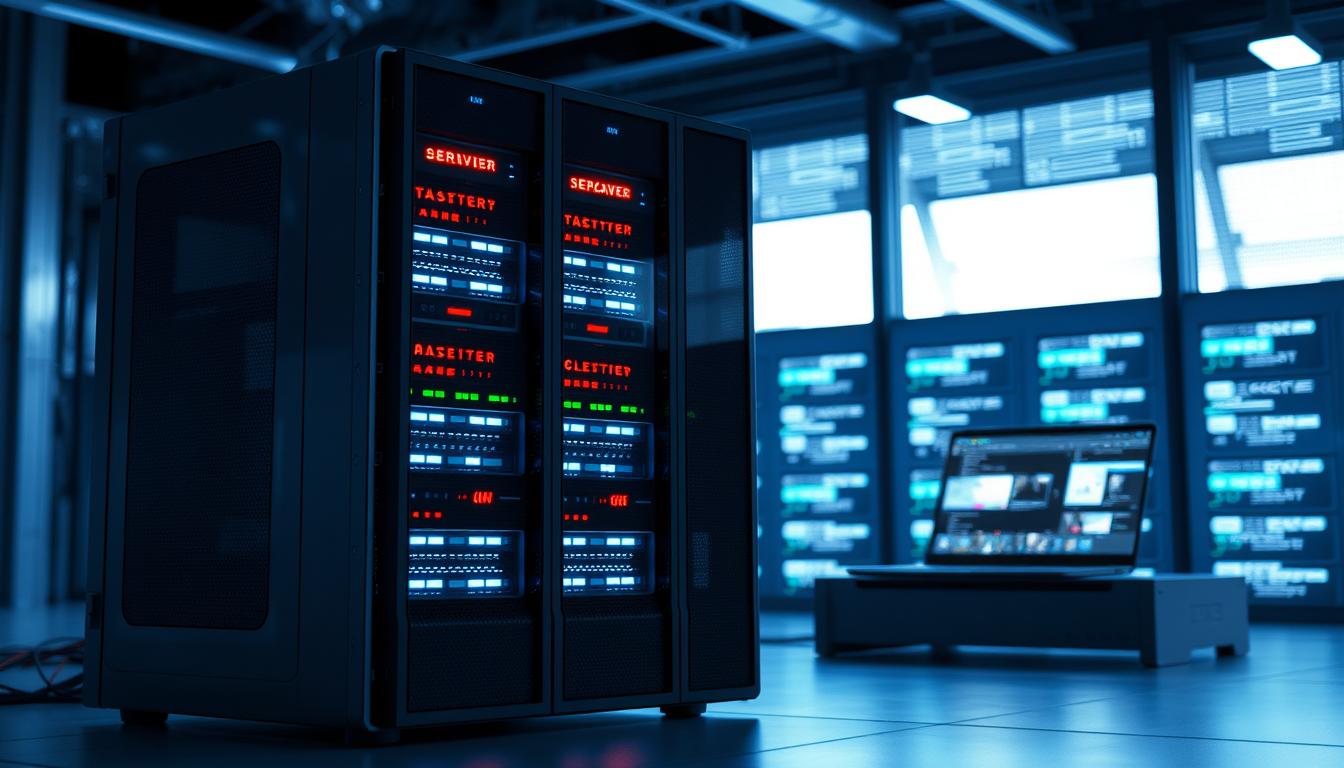
At PSB GmbH, we understand the critical requirements that cleanroom environments pose for industrial PC systems. Drawing on over 30 years of engineering expertise, we are committed to delivering solutions that fully comply with ISO 14644 standards, ensuring minimal particle emissions and uncompromising reliability. Our team develops PC-based hardware tailored for cleanroom applications, balancing stringent hygiene measures, robust construction, and operational precision. By combining advanced filtration, reliable sealing, and IP65 protection, our systems are engineered for optimal functionality even under the strictest cleanroom classification. The flexibility of our manufacturing processes enables us to adapt quickly to specific customer demands, from prototype development to serial production. Every PSB solution is rooted in a careful understanding of cleanroom challenges and a dedication to outperforming industry standards.
What is a Cleanroom According to ISO 14644?
A cleanroom, as defined by ISO 14644, is a controlled environment where the concentration of airborne particles is strictly limited. ISO 14644 sets out the criteria for classifying and maintaining cleanrooms, especially in industries like pharmaceuticals, semiconductors, and medical technology. The cleanroom class—or Reinraumklasse—determines the permissible particle concentration and thus, the environmental conditions that equipment, such as an Industrie-PC Reinraum, must withstand.
ISO 14644 Cleanroom Classes and Particle Limits
| ISO Class | Maximum Particles ≥0.1 μm/m³ | Maximum Particles ≥0.5 μm/m³ | Typical Application |
|---|---|---|---|
| ISO 1 | 10 | No requirements | Advanced semiconductor manufacturing |
| ISO 5 | 100,000 | 3,520 | Pharmaceutical filling zones |
| ISO 7 | 352,000,000 | 352,000 | Production of medical devices |
| ISO 8 | Not specified | 3,520,000 | General pharmaceutical areas |
Each Reinraumklasse corresponds to maximum permissible Partikelkonzentration. These limits must be maintained by appropriate air handling (including HEPA/ULPA filtration), specifying critical performance requirements for all technical equipment such as computers and operator interfaces.
ISO 14644 vs. GMP: Key Differences
While ISO 14644 focuses on air cleanliness by particle count, GMP (Good Manufacturing Practice) regulations emphasize safe processes, hygiene, and documentation in cleanroom production, especially in pharmaceutical and food industries. Comparing ISO 14644 vs. GMP, the former provides quantitative air standards while GMP covers broader requirements including equipment qualification, monitoring, and EMC-certified hardware compliance.
Technical Requirements for Industrial PCs in the Cleanroom
The unique environment of a cleanroom imposes strict criteria for any IT hardware. For a compliant Reinraum PC or Edelstahl PC Reinraum, the design must address particular risks including unwanted particle emission, contamination, and easy-to-clean surfaces. The following aspects are especially relevant:
Material and Construction
- Stainless steel (Edelstahl): Non-porous, corrosion-resistant, and durable; allows for aggressive cleaning and disinfecting procedures.
- Smooth and crevice-free surfaces: Prevents particle or microbial buildup and enables thorough Reinigung.
- Enclosed housing: Fanless and sealed designs, as in fanless silent workstations, limit internal and external pollution.
Ingress Protection (IP) Ratings
- IP65 and higher: Ensures that the IP65 PC Reinraum can withstand jets of water, cleaning chemicals, and dust ingress.
- IP69K: For environments with high-pressure hot water cleaning, often required in food and pharma.
Filtration and Airflow
- HEPA/ULPA Filters: Integration of high-efficiency particulate air (HEPA) or ultra-low penetration air (ULPA) filters minimizes particle emission from internal electronics.
- Fanless Operation: Fanless rackmount PCs avoid active air movement, reducing risk of spreading particles.
Electrostatic Discharge (ESD) Protection
To protect both sensitive electronic components and cleanroom processes, ESD Schutz Reinraum is mandatory, especially in semiconductor and pharmaceutical manufacturing lines. Proper grounding and anti-static coatings are essential features.
Documentation and Compliance
- Complete traceability: Full Dokumentation for equipment specifications, service history, and maintenance procedures supporting regulatory audits and GMP compliance.
- Validation services: Testing and certificates for ISO 14644 and GMP, alongside 24/7 continuous use reliability.
Cleaning and Maintenance
Components must tolerate aggressive cleaning cycles. Non-ventilated systems and hermetically sealed housings simplify routine Reinigung while eliminating microbial niches and minimizing contamination risk.
Industry-Specific Requirements
Each cleanroom sector sets unique priorities for industrial PC selection and implementation.
Pharmaceuticals
- Strictest control of Partikelkonzentration Reinraum and microbial contamination
- Emphasis on sterile design, seamless stainless steel, easy-to-clean integration
- In-depth documentation and validation aligning with GMP guidelines. See also sterile PCs for pharmaceutical industry for tailored solutions.
Semiconductor Manufacturing
- Focus on ESD-safe and ultra-low particle emission
- Highest class requirements (ISO 1-4), often necessitating advanced filtering and precision airflow controls
Medical Device Production
- Compliance with ISO 14644-1, ISO 13485 (QMS), including hygiene documentation
- Traceable production data acquisition and reliable performance in validated environments
Checklist: Selection Criteria for Cleanroom Industrial PCs
- Compliance with required ISO 14644 Reinraumklasse
- Stainless steel housing (Edelstahl), crevice-free and corrosion-resistant
- Minimum IP65 (preferably IP66/IP69K for washdown areas)
- HEPA or ULPA filtered airflow, or completely fanless construction
- ESD-protected design, including anti-static coatings and grounding
- Validated sealing for connectors, touchscreens, and access points
- Detailed Dokumentation and GMP conformity certificates
- Easy-clean surfaces supporting regular Reinigung procedures
- Support for sector-specific regulations (pharma, semiconductor, medtech)
- Certification for 24/7 industrial use where required (Continuous use PCs)
FAQ: Industrial PCs in Cleanrooms According to ISO 14644
Why is stainless steel used for cleanroom PCs?
Stainless steel is non-porous, resists chemicals and corrosion, and allows for aggressive cleaning. Seamless stainless housings help reduce both particulate and microbial risk, making Edelstahl PC Reinraum a standard solution in pharmaceutical and food industries.
What IP rating do cleanroom PCs need?
Depending on the process, at least IP65 is recommended for washdown and cleaning. For harsher environments, IP69K ensures resistance to hot-water high-pressure cleaning. Refer to our silent, fanless workstation lineup for suitable PC types.
How are PCs adapted for GMP and ISO 14644 compliance?
Measures include design for minimum particle emission, support of cleaning protocols, maintaining comprehensive Dokumentation, and implementing validated filtering systems. GMP also requires in-depth process monitoring, which is supported by integrated EMC-certified hardware.
What special features are important for semiconductor or pharmaceutical environments?
Ultra-fine filtration, passive cooling, ESD protection, and thorough audit documentation are critical. Specific guidance can be found in our article on sterile PCs for pharmaceutical industry.
How do you ensure reliable cleanroom PC operation 24/7?
Choose systems designed for continuous operation, with validated mean time between failure (MTBF), redundant power supplies, and robust enclosures. Proper maintenance, traceable records, and rigorous qualification processes further improve reliability and compliance.
Cleanroom manufacturing demands a holistic approach to system design, integration, and long-term operation. At PSB GmbH, our extensive experience with ISO 14644-compliant industrial PCs ensures that each system consistently meets both regulatory and operational requirements. We prioritize durability, ease of maintenance, and seamless integration into diverse cleanroom setups, backed by rigorous burn-in testing and comprehensive in-house quality assurance. Our commitment to flexibility means we adapt solutions to evolving cleanroom technologies and customer needs, ensuring readiness for future developments. Clients rely on our expertise for systems that not only protect sensitive processes but also deliver dependable performance over many years. Looking forward, we remain dedicated to setting new benchmarks for reliability and innovation in cleanroom computing.