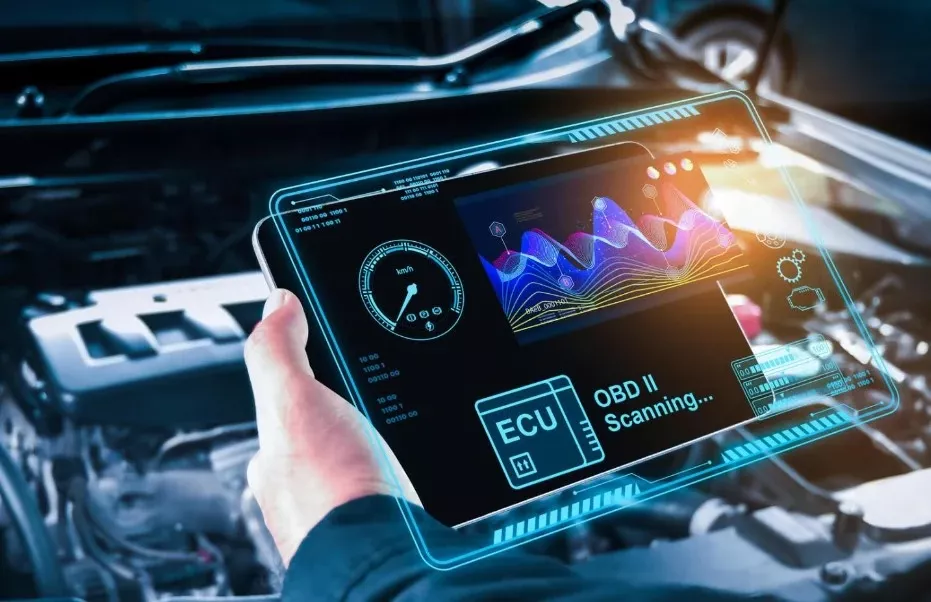
Electromagnetic compatibility (EMC) calculators for automotive applications play a crucial role in today’s ever-evolving vehicle technologies. At PSB GmbH, our approach to developing PC-based EMC solutions is rooted in a deep understanding of the fields, parameters, and specific needs of industrial customers. Our engineering teams routinely address the stringent requirements for EMC testing and validation in automotive environments, tailoring each system to precise customer specifications. We leverage our decades of experience to design tools that account for relevant parameters such as emission limits, susceptibility thresholds, and diverse field conditions. This ensures robust system integration even under challenging operational scenarios. Collaborating closely with OEMs and suppliers, we provide reliable, flexible hardware that stands up to both technical and environmental demands.
What is an EMV-Rechner for Automotive?
An EMV-Rechner Automotive, or EMC calculator, is a specialized software tool designed to calculate and convert electromagnetic compatibility (EMC) parameters for automotive applications. These tools support engineers in the assessment and design of vehicle electronics regarding their susceptibility to and emission of electromagnetic fields, using units like electromagnetic field strength (V/m, dBµV/m), power density (W/m²), magnetic flux density (Tesla, Gauss), and current density (A/m).
Within the automotive sector, the increasing use of sensitive electronics and high-frequency digital signals heightens the risk of electromagnetic interference. EMV-Rechner tools play a central role in achieving compliance with relevant EMC standards, such as CISPR 25, and fulfilling OEM requirements. They simplify calculations involving field strength, power, and other critical parameters, delivering quick results for unit conversions, norm-compliant designs, and design validations.
Key Calculator Tools and Functions
The practical value of EMV-Rechner tools lies in their versatility and focused utility. Below is an overview of the main types available and the problems they solve in automotive EMC engineering:
Field Strength Converters
Feldstärke-Umrechner enable quick conversion between field strength units relevant in EMC compliance (V/m, dBµV/m). For instance, a real-world measurement might be taken in V/m, whereas standards and test reports usually specify limits in dBµV/m. Instant, accurate conversion is essential to check against EMV-Grenzwert thresholds and avoid misinterpretations. Many industrial computers used in test labs rely on such calculators integrated into their quality assurance software.
ERP/EIRP Calculators
For automotive antennas and wireless components, knowing the Effective Radiated Power (ERP) or Equivalent Isotropically Radiated Power (EIRP) is critical for transmission compliance. ERP/EIRP calculators allow engineers to compute transmitter output power, factoring in system losses and antenna gain. This function ensures that communication modules in vehicles, such as those running on V2X protocols, stay within regulatory boundaries and maintain safe operation.
VSWR Calculators
The VSWR-Rechner (Voltage Standing Wave Ratio calculator) evaluates the matching of transmission lines and antennas, helping developers reduce signal reflection and loss. This is key when designing infotainment systems, telematics units, or wireless charging modules. By inputting reflected and incident power values, engineers can quickly determine whether their design meets impedance-matching requirements for robust performance.
SAR and Ohm’s Law Calculations
SAR-Berechnung tools are crucial for components emitting strong electromagnetic fields, ensuring compliance with exposure limits regarding specific absorption rate (SAR). Likewise, a digital implementation of Ohm’s Law provides fast, error-free calculation of voltage, current, resistance, and power across circuits in the automotive environment, streamlining troubleshooting and design validation.
Typical Use Cases in Practice
Modern vehicles integrate a diverse array of electronic subsystems, each requiring EMC evaluation. Here are key automotive use cases where an EMV-Rechner optimizes workflow:
- Design validation of new control units: During ECU development, engineers employ EMV-Rechner Automotive tools to calculate emitted and received electromagnetic field strength, ensuring design readiness for the approval process. For example, field strength data measured on the test bench can be instantly converted to compliance values using a Feldstärke-Umrechner online, expediting conformity assessment.
- Pre-compliance and troubleshooting: Before submitting products for final certification, developers use VSWR calculators and ERP/EIRP computations to address potential weak points. Diagnostics performed with such calculators help anticipate issues related to signal integrity, antenna mismatch, or excessive emission, ultimately speeding up the transition to mass production.
- Test report creation and documentation: Tools like EMV-Rechner allow quick conversion between units required by regulatory filings and CISPR 25 Prüfberichte. Automated conversion and calculation minimize manual errors in documentation, simplifying the creation of test reports that can be directly included in approval dossiers or project files.
- System integration in industrial computers: Industrial PCs used on test benches or in production support the integration of EMV-Rechner solutions to streamline test automation. This digital enablement ensures seamless calculation and storage of EMC parameters across workflows.
Norms and Standards: EMC Limits and Test Reports
Compliance with industry standards is a fundamental concern in automotive electrical engineering. Prominent among these are:
- CISPR 25: This standard specifies measurement methods and emission limits for vehicles and their subassemblies regarding electromagnetic disturbances affecting radio reception. Most OEMs follow CISPR 25 requirements for in-vehicle electronics, making the rapid conversion of test data using Feldstärke-Umrechner indispensable for labs and engineers.
- OEM Requirements: Leading vehicle manufacturers impose proprietary, often stricter, EMC limits to ensure product quality and differentiation. EMV-Rechner Automotive tools are configured to check field strength and power density values against both ISO/CISPR standards and specific OEM targets, ensuring hassle-free compliance reviews.
- Documentation and Test Reports: Generating standardized and transparent Prüfberichte (test reports) is a legal obligation for component type approval. EMV-Rechner enable direct inclusion of calculated results, formatted per the latest regulatory requirements, into reports, facilitating smooth exchange between developers, testing facilities, and certifying bodies.
The ability to compare measured values efficiently with the reference limits, such as those found in CISPR 25 Prüfberichte, forms the backbone of electromagnetic compatibility for automobiles at each stage of development and certification.
Advantages of Digital EMC Tools for Developers and Test Labs
Modern EMC development environments in the automotive industry benefit significantly from digitalization. Online EMV-Rechner Automotive tools deliver key advantages:
- Speed and Accuracy: Automated calculators reduce manual computation errors, convert between units rapidly, and allow side-by-side EMV-Grenzwert comparison during iterative testing cycles, boosting throughput.
- Seamless Integration: These tools are often embedded in fanless touch panel PCs and industrial computers, promoting robust, ergonomic workstations for lab and production use. Sophisticated hardware integration provides stable, fast access to EMV tools even in demanding environments like endurance test rigs or EMC chambers.
- Up-to-date Regulatory Support: Digital EMV-Rechner are maintained in sync with the latest EMC standards and CISPR 25 updates, ensuring ongoing adherence to current legal requirements and streamlining certification workloads for defense and rugged automotive platforms.
- Cost and Resource Optimization: By minimizing calculation time and manual data transfer, developers and test labs can focus resources on innovation and product quality, rather than repetitive arithmetic or documentation workflows.
Practical use examples range from on-the-fly SAR assessments in R&D to regular VSWR checks during antenna and harness assembly. The combination of robust digital hardware and advanced software tools for electromagnetic compatibility maximizes efficiency in the competitive automotive electronics market.
Fazit: Effizienz durch spezialisierte EMV-Rechner
Specialized EMV-Rechner Automotive tools, tailored for the automotive sector, contribute decisively to the effectiveness of EMV testing and approval workflows. By streamlining field strength conversions, automating EIRP and VSWR assessments, and facilitating compliance checks against norms like CISPR 25, these calculators help ensure robust, reliable, and compliant automotive electronics at every stage of development and production.
The necessity for dependable EMC assessment tools in automotive contexts cannot be overstated, given the sector’s strict safety and reliability standards. PSB GmbH’s long-standing expertise enables us to deliver solutions that not only meet today’s requirements but also anticipate future industry trends. Our commitment to rigorous testing, including thorough burn-in procedures and comprehensive validation, ensures every system provides lasting performance in the field. By maintaining independent, customer-driven development processes, we help our partners navigate complex EMC challenges with confidence and efficiency. Moving forward, we will continue to support the automotive sector’s progress with flexible, innovative, and sustainable engineering solutions, built on the foundation of durable quality and trust.